Ready to learn about Honeybees? Well you better Bee! Because that’s what this passage is all about. Time to learn all about them!
Summary
Honeybees are essential pollinators that help plants grow, reproduce, and produce food. They play a key role in agriculture by pollinating about one-third of the world’s crops. Honeybees work together to collect nectar, make honey, and care for the hive. Their impact on the environment and food supply makes them vital to ecosystems around the world.
The name scientific name for the genus honeybees is Apis mellifera, with Apis meaning “bee”, and mellifera standing for “honey-bearing” or “honey-carrying”.
Pollen baskets
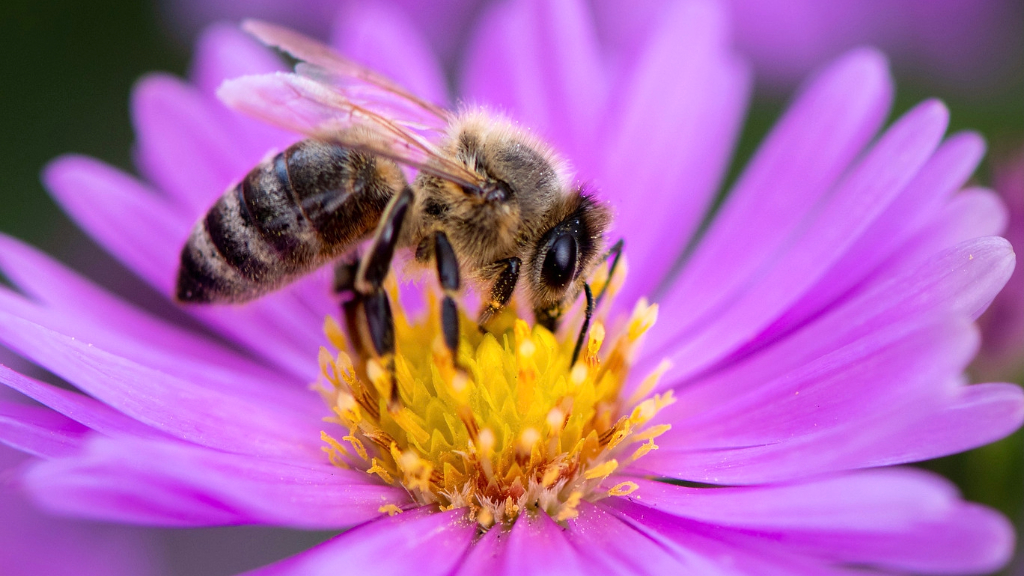
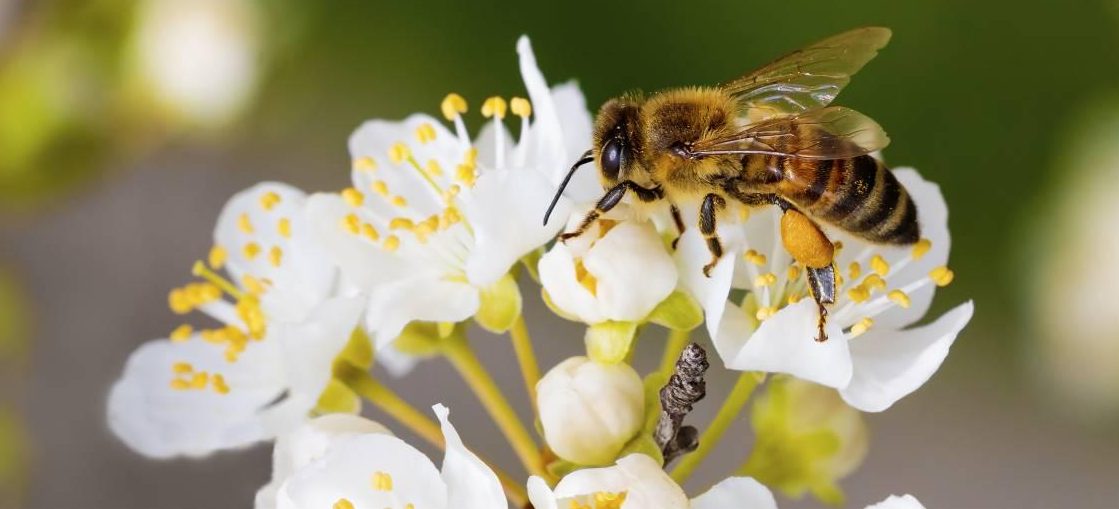
Pollen baskets are where bees keep the pollen they’ve collected to bring to the hive after pollinating. Honeybees brush pollen from flowers into the basket and keeps them as a pellet, or “the pollen load”
Swarms
What are swarms? When a hive gets too populated, and it’s too hard for the queen to use pheremones to control the hive, workers will then signal that it’s time to swarm. Workers start creating swarm cells for new queens. And after that, foraging slows down, and the queen stops laying eggs and loses weight to get ready to fly. Finally, the queen and about half of the workers leave to find a new home. It may seem like the bees are betraying their hive, but it’s just their way to reproduce!

Click here here to watch the video of the bees shown below during a swarm. They moved from a hive to a tree branch, then were rescued and returned to their hive.

Anatomy
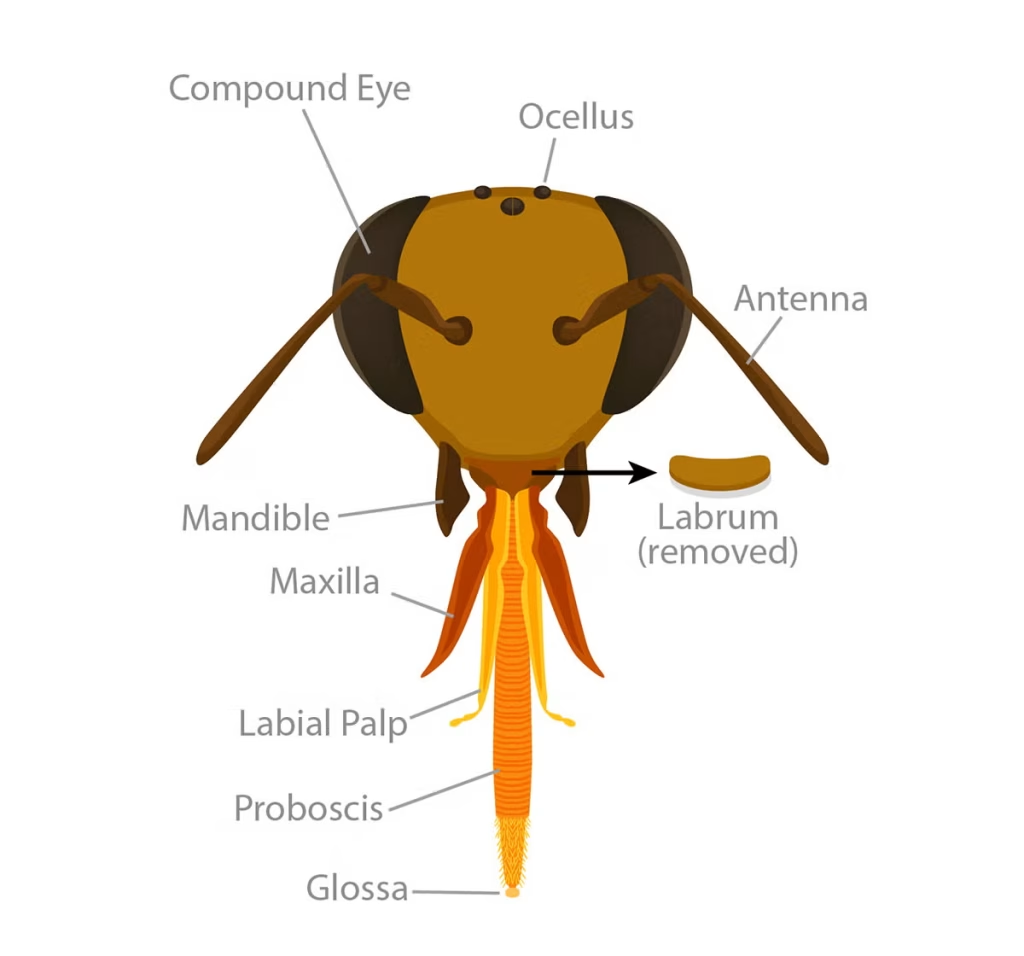
A bee’s anatomy is a bit more complicated than you would expect from a bug, but here it is! A Honeybee’s head is where the eyes, antennae, mandibles, and proboscis are found. What is a proboscis, you may ask? A proboscis is “an elongated sucking mouthpart that is typically tubular and flexible.”
The next segment is the thorax, or the thoracic region. there isn’t really anything to it besides a lot of fur, or scientifically for Honeybees, Setae.
The final segment is the abdominal region, (or abdomen) where the stinger is found! Its also home to all of the organs and the venom sac.
Roles in the hive
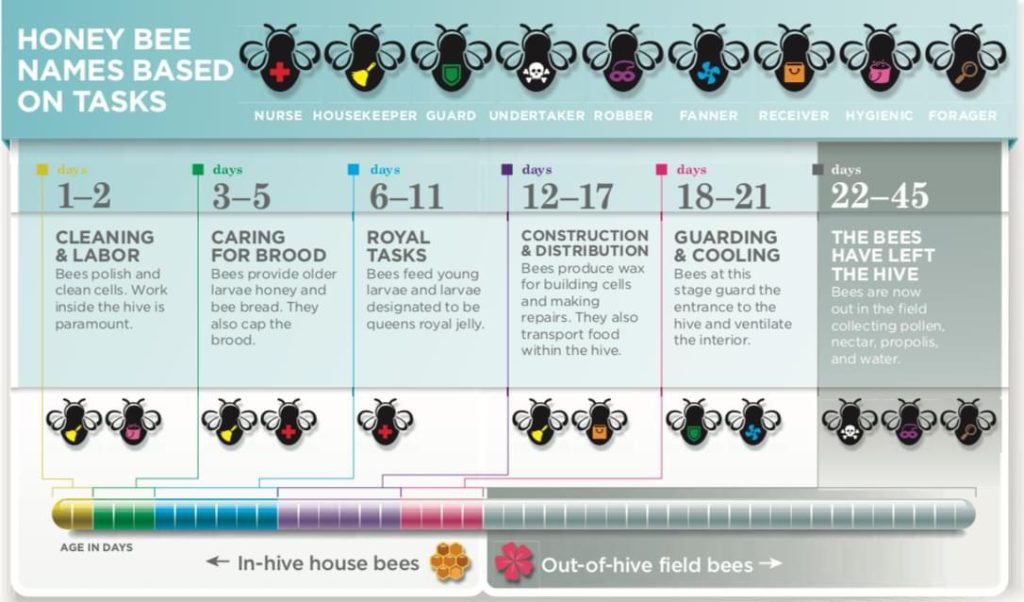
First, are the females. They are the ones who do all the work in the hive including foraging for nectar and pollen, producing honey, caring for the queen and brood, building and maintaining the hive, and guarding the colony. The males, or drones, don’t do anything besides mating with the queen, getting kicked out of the hive, occasionally having parts of their wings chewed off, and being left out to die of starvation or thirst.

Bees and bee-like insects
Starting off, wasps, hornets, and yellow jackets are NOT BEES. Bees are Bumblebees and Honeybees. An insect that may look like a wasp, or even a yellow jacket, is probably a hover fly
Fun facts:
An average honeybee hive has 20,000-80,000 bees
Honeybees, produce approximately 30-35% of the world’s crops
Honeybees can fly up to 15 miles per hour
The oldest jar of honey that has been discovered is 5,500 years old