If you came here to learn about cats, then you have come to the right place! There are tons of paragraphs of what cats do, how they live, their bones, and more. Now enough of me talking. Time for you to read about cats!
Cats
Summary of Cats
A cat is also known as a Felis catus. They are usually kept as a house cat, but sometimes live in the wild. They have retractable claws so they can kill small animals, like mice and rats. They have flexible bodies, quick reflexes because of their feral instincts, and sharp teeth made for killing prey. They have strong night vision and a strong sense of smell that’s well developed.
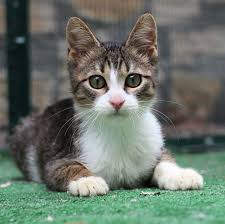
Cat’s Intelligence
Cats are very intelligent, such as their ability to adapt to things, learn through observation, and solve problems. They possess strong memories, and display cognitive skills that can be compared to a young child’s. Cat’s communication includes meowing, purring, hissing, growling, grunting, and body language. It can also hear sounds that are too faint or too high in frequency for humans.

to play the piano.
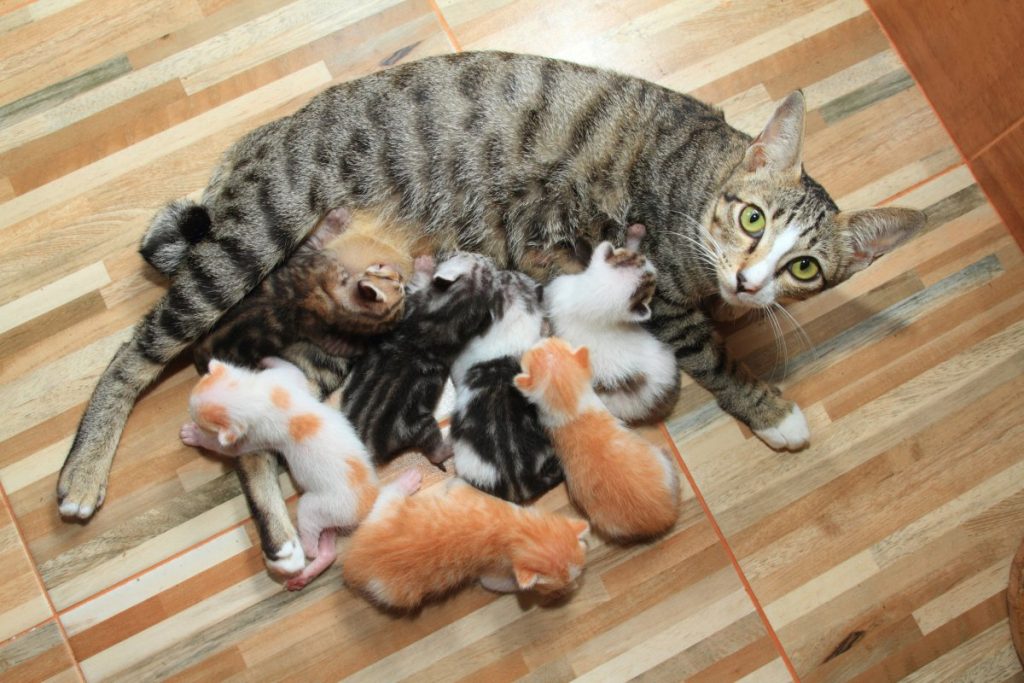
Mama Cats and Their Kittens
Female cats can have kittens from spring to late autumn, with litters often ranging from 2 to 5 kittens. Population control includes spaying and neutering, but unfortunately, pet abandonment has highly raised the feral cat population, causing endangerment of bird, mammal, and reptile species.
Domesticated Cats
Domestic cats are found around the globe, yet their popularity as pets varies by region. Out of the estimated 600 MILLION cats worldwide, 400 million reside in Asia, including 58 million domestic cats in China. The USA has the most owners of cats, with 73.8 million cats, despite having a smaller human population. In the United Kingdom, approximately 10.9 million domestic cats are kept as pets.

Cat Bones
The domestic cat has a smaller skull and shorter bones than the European wildcat. They average about 46 cm in head-to-body-length and 23-25 cm in height, with about 30 cm long tails. Males are taller than females. Adult domestic cats usually weigh 4-5 kg.

Cats have seven cervical vertebrae, 13 thoracic vertebrae, seven lumbar vertebrae, three sacral vertebrae, and a changing number of caudal vertebrae in the tail. The extra lumber and thoracic vertebrae account for the cat’s spinal mobility and flexibility. Attached to the spine are 13 ribs, the shoulder, and the pelvis. Unlike human arms, cat front limbs are attached to the shoulder by free-floating clavicle bones which allow them to pass through any space which they can fit their head.
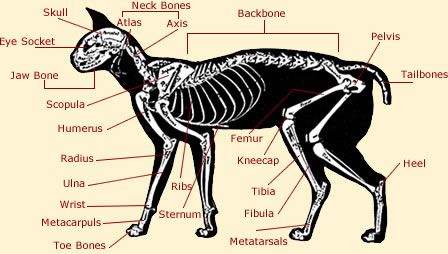
The cat skull is a bit unusual among many mammals in having eye sockets and a powerful specialized jaw. They have two long canine teeth for killing and tearing up prey, and can stab between two of the prey’s vertebrae and sever its spinal cord, which causes paralysis and death. Compared to other felines, domestic cats have narrowly spaced canine teeth relative to the size of their jaw, which is an adaption to their preferred prey of small rodents.
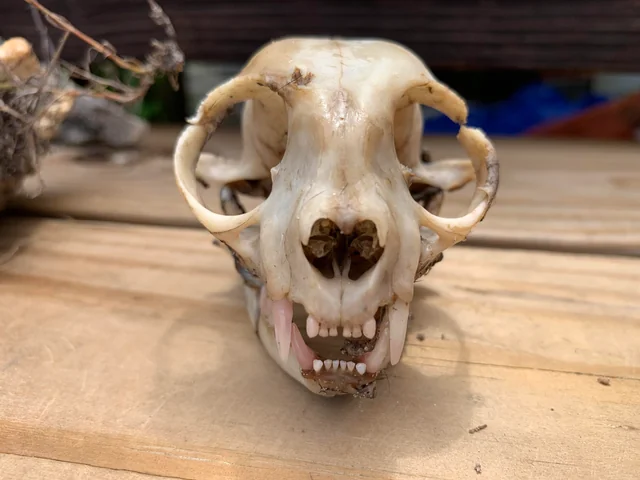
The premolar and first molar together compose the carnassial pair on each side of the mouth, which efficiently tears meat into small pieces. Cats tend to have better dental health than most humans, decay less likely because a thicker layer of enamel, a less damaging saliva, less retention of food particles between teeth, and a diet mostly devoid of sugar. Cats are subject to occasional tooth loss and infection.

Cat Claws
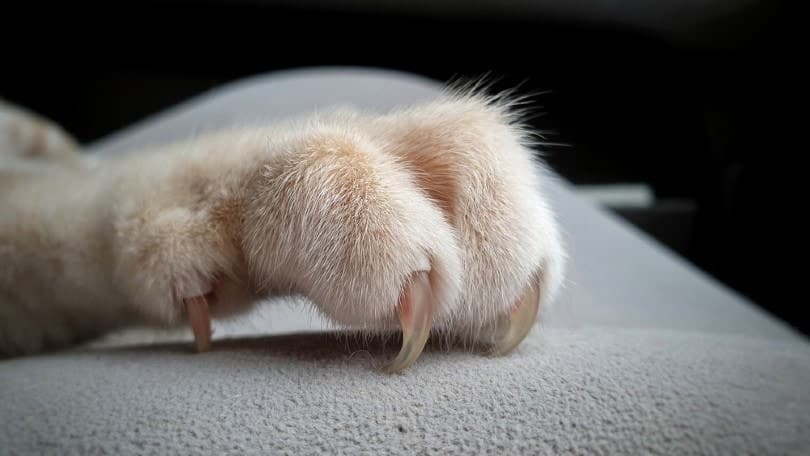
Cats have protractible and retractable claws. When they are relaxed, their claws are sheathed with the skin and fur around the paw’s toe beans. This act keeps the claws sharp by stopping wear from contact with the ground and allows cats to silently stalk prey. The claws on the front paws are usually sharper than those on the back paws. Cats can extend their claws, as they are used for hunting, fighting, climbing, kneading, or for more traction on soft surfaces. Cats shed the outside layer of their claw sheaths when scratching rough surfaces.
Walking and Trotting
Cats are something called digitigrade. They walk on their toes, with the bones of the feet making up the lower part of the visible leg. Unlike most animals, cats use a “pacing” gait that alternates both legs together on each side. They register directly by placing each hind paw close to the track of the corresponding front paw, lowering noise and visible tracks. This also provides good footing for hind paws when navigating rough terrain. As cats speed up from walking to trotting, their gait changes to a diagonal gait: The diagonally opposite hind legs and fore legs move at the same time.

Balance
Cats are fond of perching in high places. This may be a concealed hunting site such as a tree branch, for domestic cats to pounce upon prey. They favor a superior watching point over territory. A cat falling from up to 3 m can right itself and land on its paws. During a lofty fall, a cat can reflexively twist and right itself to land on all four feet using its acute sense of balance and flexibility. This reflex is known as the cat righting reflex. A cat always rights itself in the same way, and has enough time in falls of at least 90 cm.

Games!
Unfortunately, this is the end of the cat section. Fortunately, here is a really fun game you can play about a cat trying to navigate through a forest!